


Perspective
The O&E Report and the Day It Stops Being True
An O&E report only describes the record on the day it was searched. Here is what it covers, where vendors disagree, and how a lender can see what was recorded afterward.
The Paper Trail
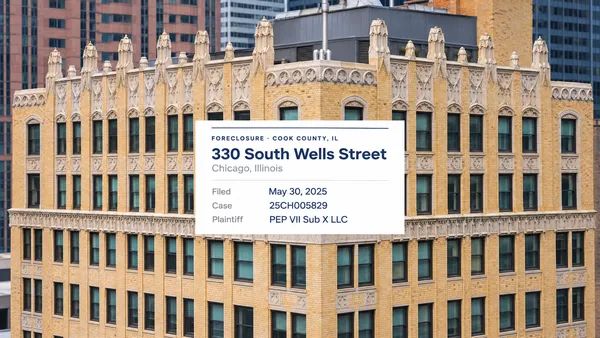
In May 2025, the lender on LG Development's 330 S. Wells in Chicago filed to foreclose and named LG's CEO, Brian Goldberg, as guarantor. Santander's $94.2 million loan on a different LG building ran almost 14 more months after the filing became public.
The Paper Trail
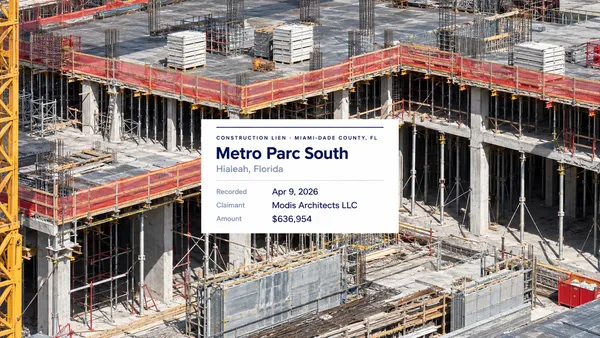
Most of the money suing MG Developer came from private lenders to its sister companies. For them, the first trouble on the public record was a run of contractor liens on its largest Hialeah project, starting in April 2026.
The Paper Trail
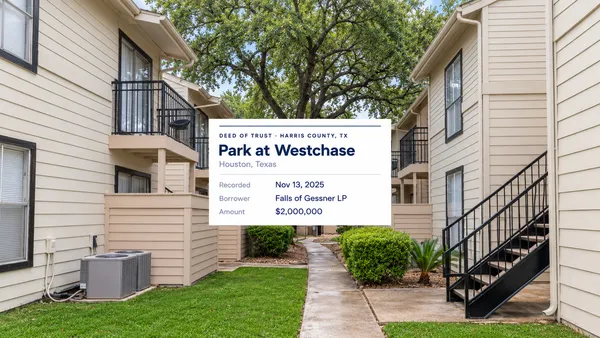
Fannie Mae alleges its Houston borrowers put $11.3 million of junior debt on its collateral without consent. The deeds of trust were in the county records, and two were recorded after other Falls buildings went to the foreclosure list.
The Paper Trail
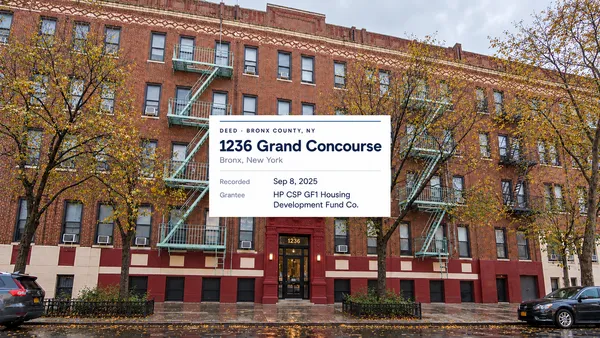
In May and June two banks went to court to foreclose on Prana Investments buildings in the Bronx. About seven months before Prana stopped paying, the holder of its old Signature Bank loans signed new agreements on 15 other Prana properties, with a city tax exemption attached.

Portfolio Blind Spots
Why a portfolio of clean loans can still hide a concentrated bet on one balance sheet. Ask a lender how many Sponsors they have exposure to and you'll usually get a confident number. Ask them how many legal entities sit between their capital and the real estate that

Portfolio Blind Spots
Diligence is a project. A portfolio is a permanent condition. The two were never built to meet. At forty loans, an asset manager can keep the whole book in their head. At four hundred, nobody knows the whole book. At four thousand, the book is a spreadsheet reviewed when something

Portfolio Blind Spots
Borrower reporting isn't dishonest. It is structurally incapable of telling you what you most need to know. Post-close oversight rests on a premise almost nobody says aloud: the party whose performance you are monitoring is the party producing the monitoring data. That is the third blind spot—

Risk Intelligence
The U.S. real estate market, valued at over $47 trillion, has historically relied on "Trust-Based" systems - notaries, county clerks, and physical signatures. However, 2024 and 2025 have proven that these legacy systems are ill-equipped for the digital age. As interest rates remained "higher for

Risk Intelligence
In real estate lending and investment, the asset tends to dominate the conversation. Location. Cash flow. Valuation. Exit assumptions. Entire underwriting processes are built around understanding the property itself - and for good reason. The asset is the collateral. It's what the deal is anchored to. But over time,

In real estate investing, there is a quiet assumption that risk is something you discover. You run due diligence. You review documents. You validate the structure. At that moment, everything is clear. The asset checks out. The borrower is approved. The deal moves forward. And from that point on, there

Real estate has always been a relationship-driven business. Deals are built on trust. Capital is allocated through relationships. Information flows through people. Investors trust sponsors. Lenders trust borrowers. Partners trust reporting. And in many cases, that trust is justified. But structurally, it creates a dependency. Trust as an Operational

In real estate, risk is often associated with visible problems. Missed payments. Distressed assets. Legal disputes that surface publicly. These are clear. They demand attention. They trigger action. But the more complex risks rarely look like risk at all. The Appearance of Stability An asset can appear completely stable. Cash

Every real estate deal begins with clarity. At origination, everything is examined. Documents are reviewed. Structures are validated. Risks are identified and priced. There is a clear understanding of what is being entered. The Structured Beginning Due diligence is designed to reduce uncertainty. Legal teams verify ownership. Financials are analyzed.

Over the past decade, access to data has expanded dramatically. Records are digitized. Filings are searchable. Information is more accessible than ever before. On the surface, this should have solved the transparency problem. But it didn't. The Growth of Available Data There is no shortage of information. Property